
Project templates
Project templates simplify the larger scale activities you undertake in business time and time again. Using a project template, you can create a series of tasks in todo.vu with just once click. Not only do project templates save you time, they help keep you organized as well.
Here’s everything you need to know about project templates in todo.vu.
What is a project template?
In todo.vu, a project* represents a grouping of todo.vu tasks. Tasks can be standalone or grouped according to a project, and tasks and projects are either grouped to specific clients or marked as ‘in-house’.
A project template, on the other hand, is a tool that enables a todo.vu user to create a structured set of tasks once and deploy that same set repeatedly.
After a project template is created, it can be applied at any time to instantly add its tasks to a Workspace in just a few clicks — saving time and ensuring consistency.
*A ‘project’ is a term in todo.vu that represents a grouping of tasks, but a project could be any process, procedure or any multi-step activity. You can customise your Workspace’s naming settings to better suit your business and workflows.
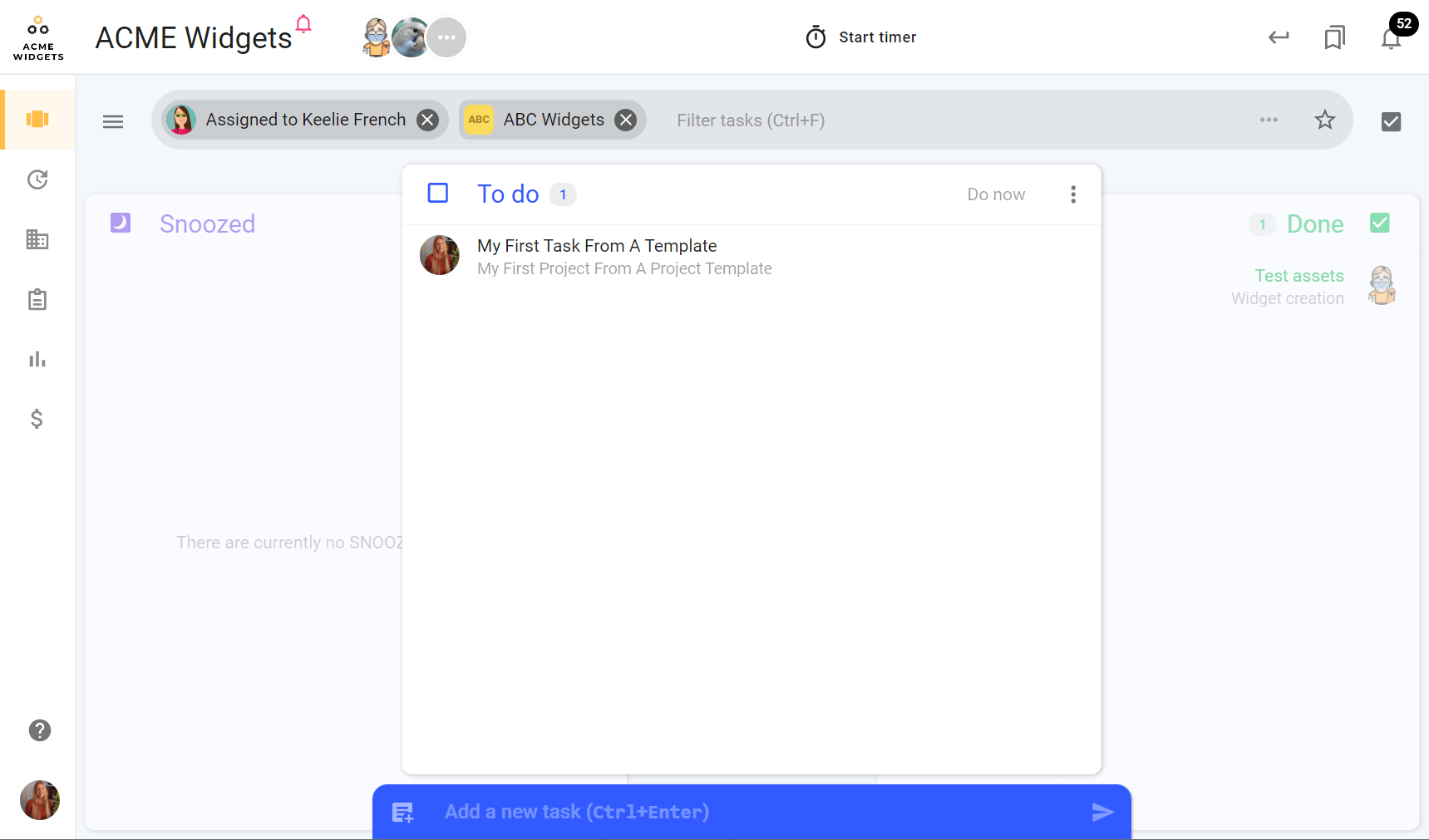
To understand todo.vu’s project template, you first need to know that a ‘project’ in todo.vu is how your tasks in todo.vu are grouped and organized.
To make project management easier and time billing clear and precise, todo.vu users track and bill time to a project through that project’s designated tasks.
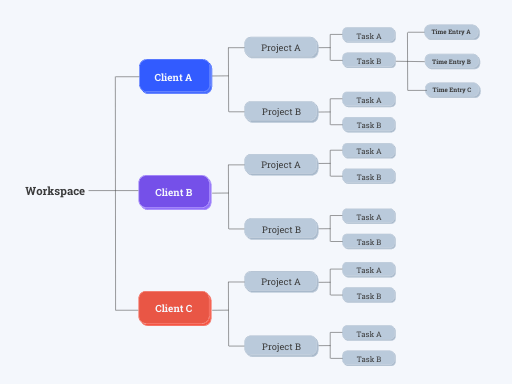
This diagram shows that projects in todo.vu represent a collection of tasks.
Why use a project template?
You may have projects that follow similar processes or procedures with a similar set of tasks that need to be completed.
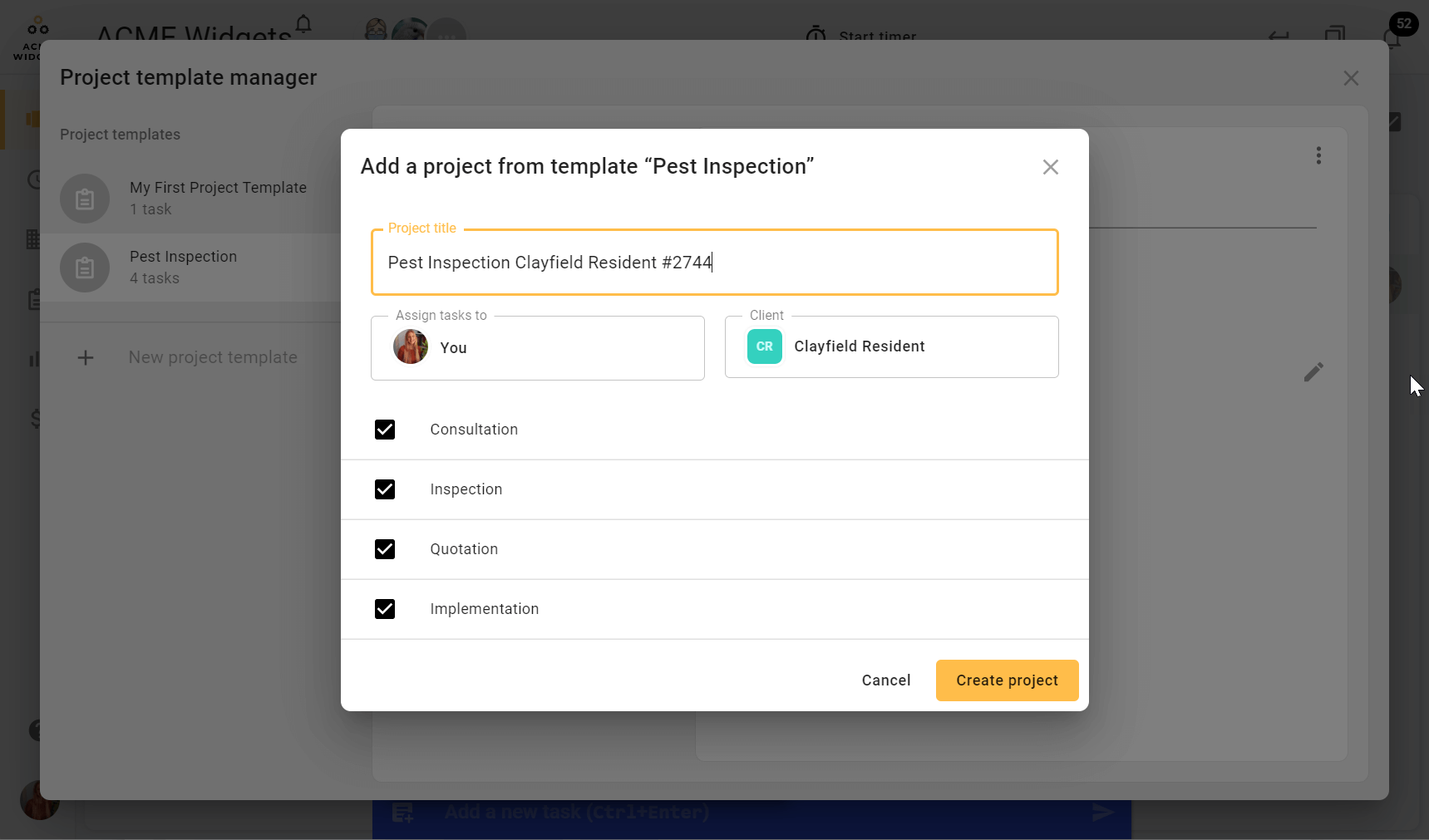
For example, in todo.vu, you may have the same Consultation task, Inspection task, Quotation task, and Implementation task for a project you undertake regularly.
With project templates, every time you need to complete the same project, you don’t have to create these tasks all over again.
You can simply set up a project template that includes the four tasks as task templates. Then, you can use the template to create the same four new tasks in your Workspace instantly whenever you need to.
Accessing your project templates
You can access your project templates, either to create a new template or to use an existing template, from:
a) the main Task Dashboard
Click the (+) icon on the left of the Task Adder bar at the bottom of your dashboard.
b) the Project Dashboard
While on todo.vu’s ‘Projects’ page, click the drop-down menu on the ‘Add project’ button at the top right-hand side of the dashboard.
c) the Client Dashboard
While on todo.vu’s ‘Clients’ page, select any client, and then navigate to the Projects tab within that client profile. Click the drop-down menu on the ‘Add project’ button at the top right-hand side of the dashboard.
todo.vu’s Task Dashboard.
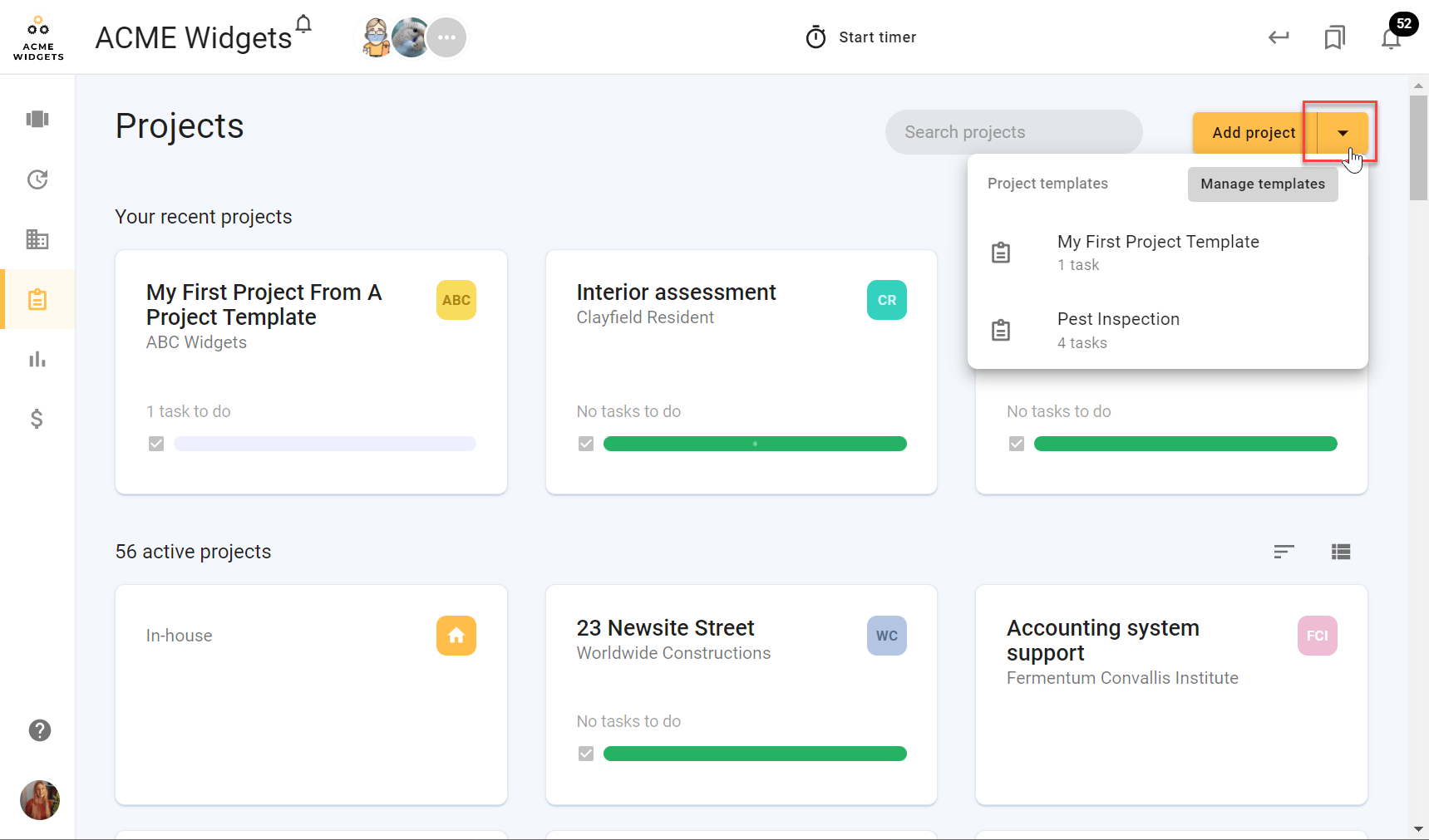
todo.vu’s Project Dashboard.
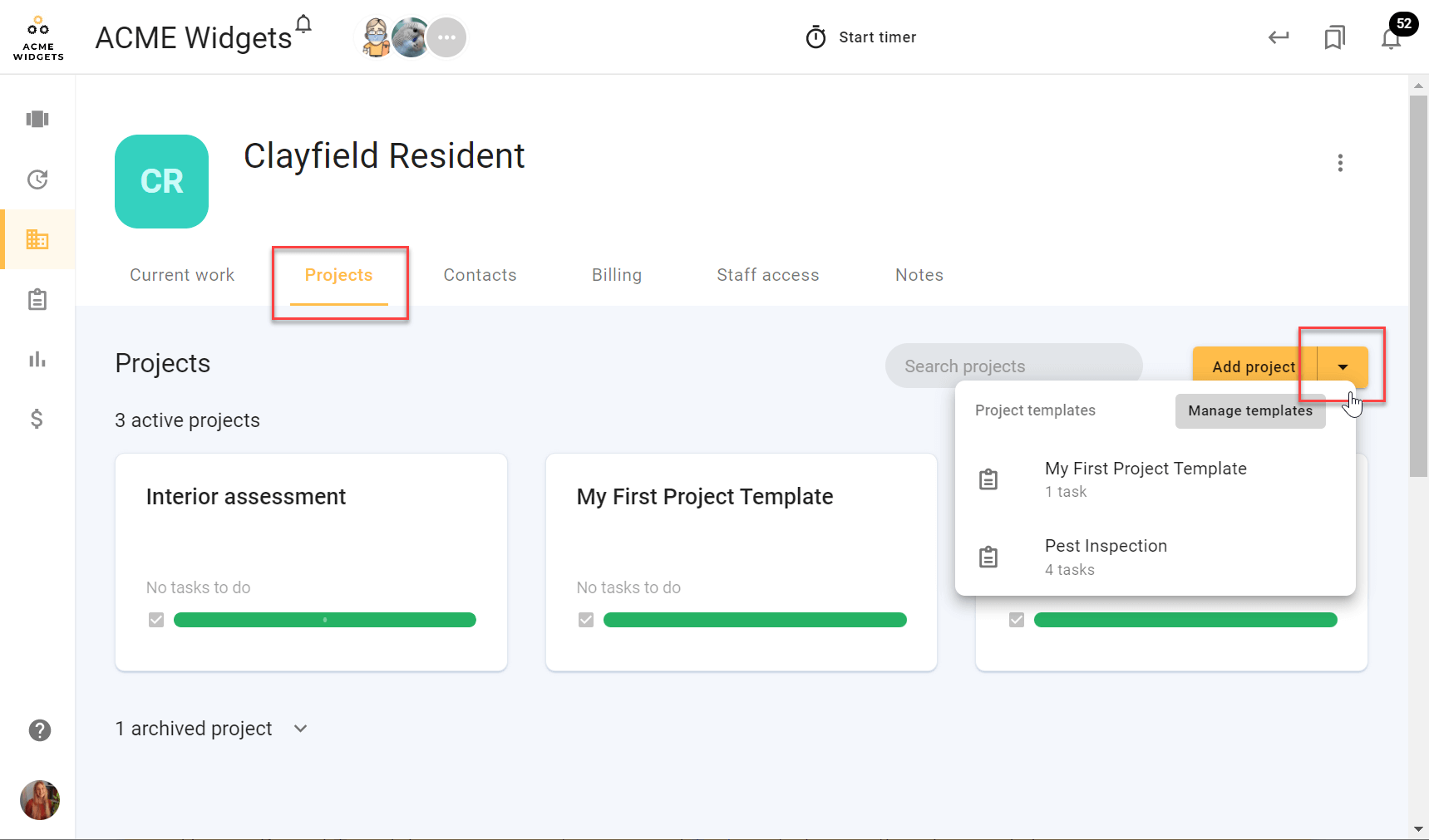
todo.vu’s Client Dashboard.
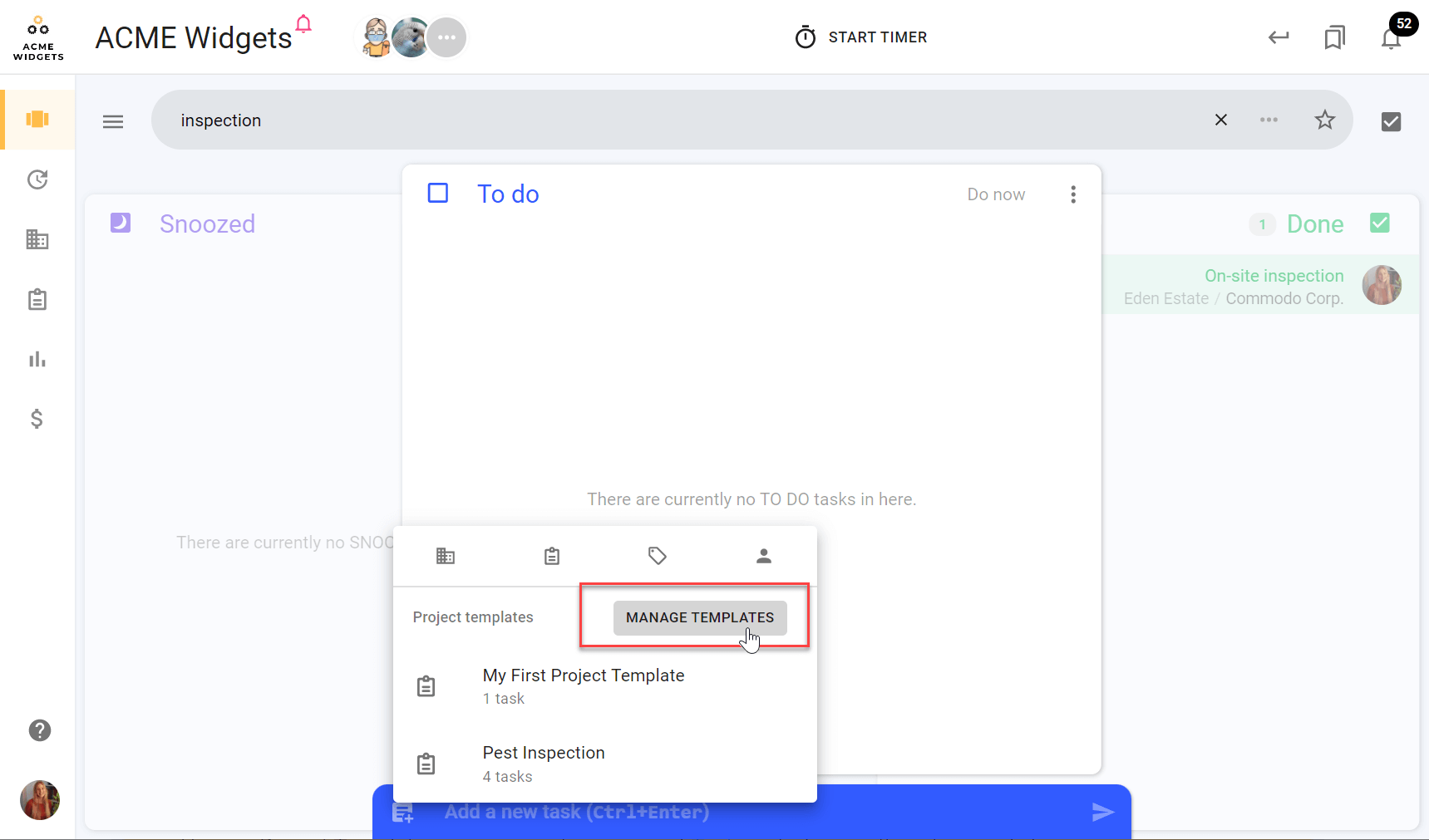
Your existing project templates will appear when you click the drop-down menu on the ‘Add project’ button, or the (+) icon on the Task Adder bar.
If you haven’t created any project templates, you won’t see any here; you will see the option to ‘Manage templates’ instead. This option is static across all todo.vu dashboards, regardless of how many project templates you have.
Create a project template
To create a new project template, first click the button to access your project template options (as detailed above), and select ‘Manage templates’. This will open your Project Template Manager.
Within the Template Manager, you will see your existing project templates listed on the left-hand side, if any, and the option to add a new project template with the (+) icon.
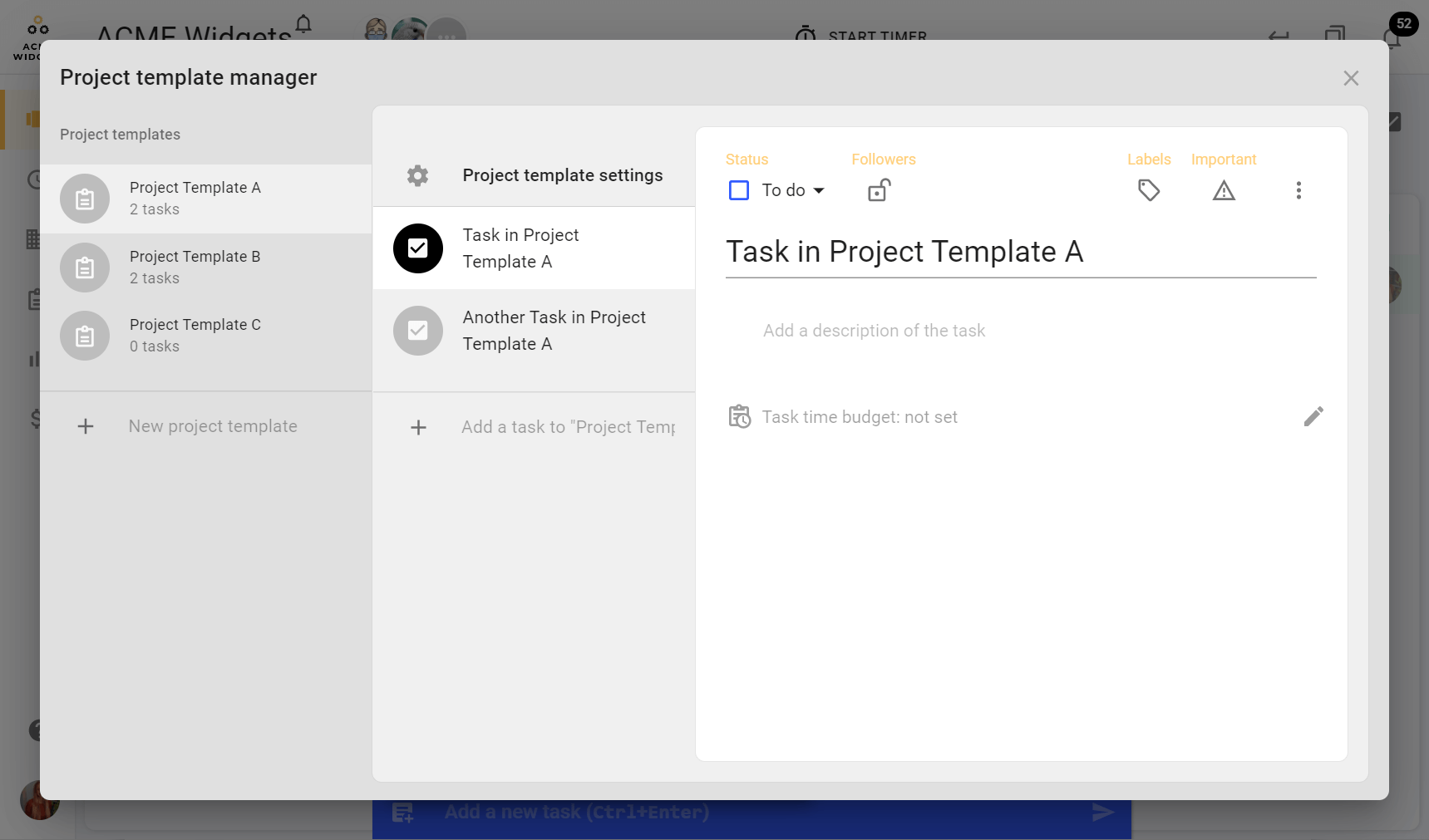
So, let’s create a new project template.
Select the (+) icon on the left-hand side within the Project Template Manager, or place your cursor on the text ‘New project template’. You will first have to create a name for your template. You can edit this later at any time.
Hit [Enter] or select the right arrow after you have finished naming your new project template; the new template will open automatically for you to continue editing.
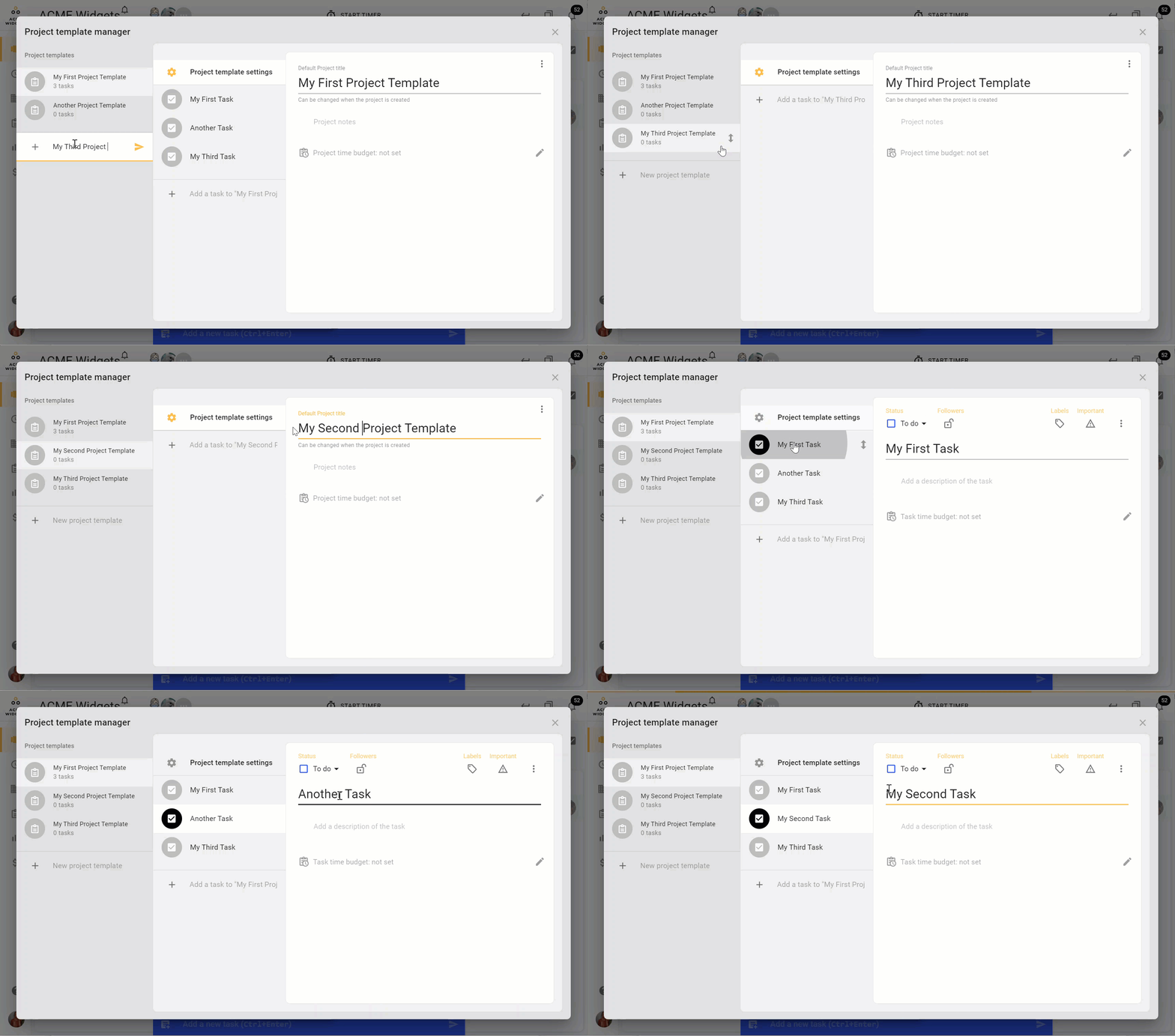
Below, we have named our new project template, ‘My First Project Template’.
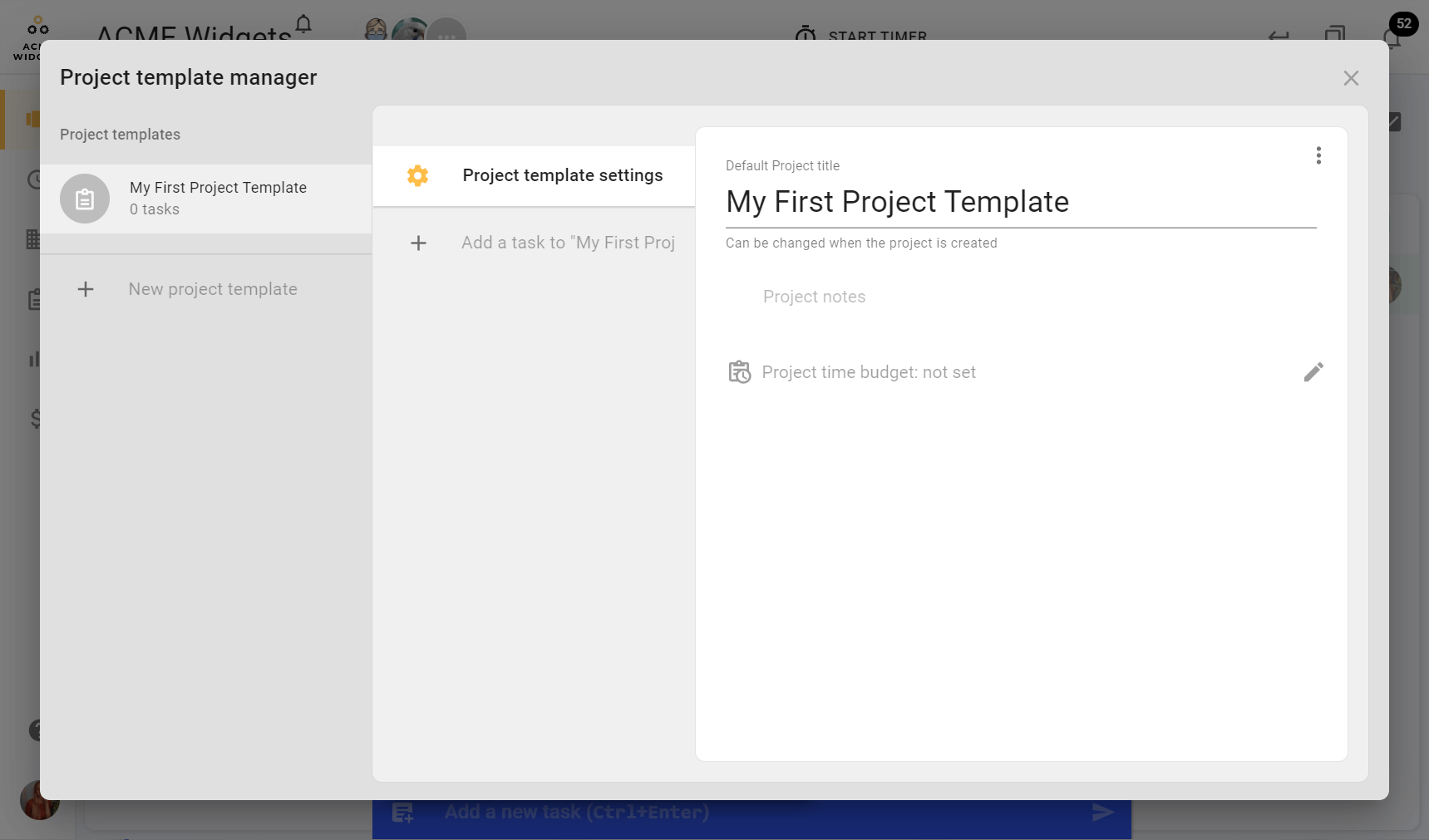
You will see three columns; here’s what they mean:
1. The first column on the left is a static column that lists your existing project templates, as well as the option to create a new one.
2. The second (middle) column dynamically updates depending on your selection from the left column. It allows you to add tasks to the selected project template.
3. The third column updates depending on your selection from the second (middle) column. When ‘Project template settings’ is selected in the middle column, the third column allows you to customize that project template. When a task is selected, the third column allows you to customize that task template.
Note: You can reorder items in the first and middle column’s list to suit your workflows with a drag and drop.
Remember: To add a new task to a project template, you must first type the title of your new task next to the (+) icon, and then press [Enter] or select the arrow to the right. Then, you can continue editing your new task.
Customize your project template
When you select ‘Project template settings’ from the middle column, using the right column you can:
- Edit the project template’s title
- Add project notes (Including checklists, custom code, bulleted lists, and more)
- Set a project time budget.
Customize your project template’s tasks
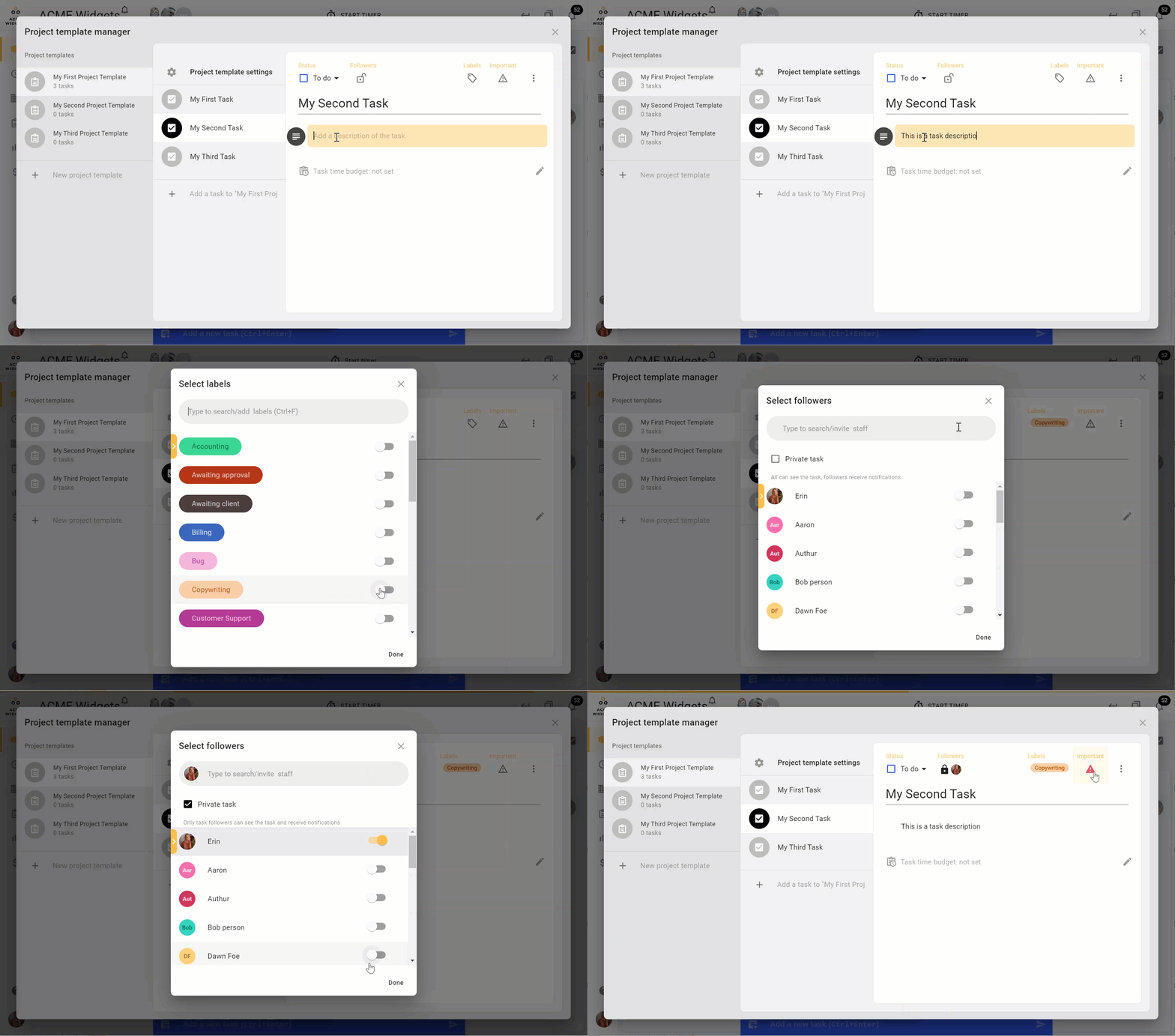
To all tasks added to your project template, you can use the right column to:
- Rename the task title
- Add followers (or make the task private)
- Set the task’s workflow status (To-Do, Snoozed or Draft)
- Add task labels
- Mark the task as ‘Important’
- Add a task description (including checklists, task links, custom code, bulleted lists, and more)
- Set a task time budget
Note: Task templates don’t support all of the same functionalities as purely creating a task directly in your Workspace does. However, once the task is live in the Dashboard it will have full functionality.
For instance, while a task is in template mode, users cannot:
- Leave comments on the task
- Upload files to the task
- Add an Assignee to the task, though when using the template, you will be prompted to add an Assignee in the final step of sending it to the Dashboard
- Add a client to the task; though if you create or use a project template through the Client Dashboard, it will automatically add that client
- Add an ‘Unsnooze’ date
- Set a due date.
Note: You don’t have to ‘Save’ your project templates, as they automatically save as you go. When you’re finished creating or editing your project template and want to exit the Project Template Manager, simply hit the (x) icon in the top right-hand corner.
Using a project template (Send a project live to the Workspace)
When you want to use a project template; that is, to create a new project from your template in your Workspace, you can simply click on the desired template that appears when you open the Project Template menu, which is found either on the:
- Task Dashboard (click the icon on the Task Adder bar)
- Client Dashboard (click the downwards arrow next to the ‘Add Project’ button on the Projects tab)
- Projects Dashboard (click the downwards arrow next to the ‘Add Project’ button).
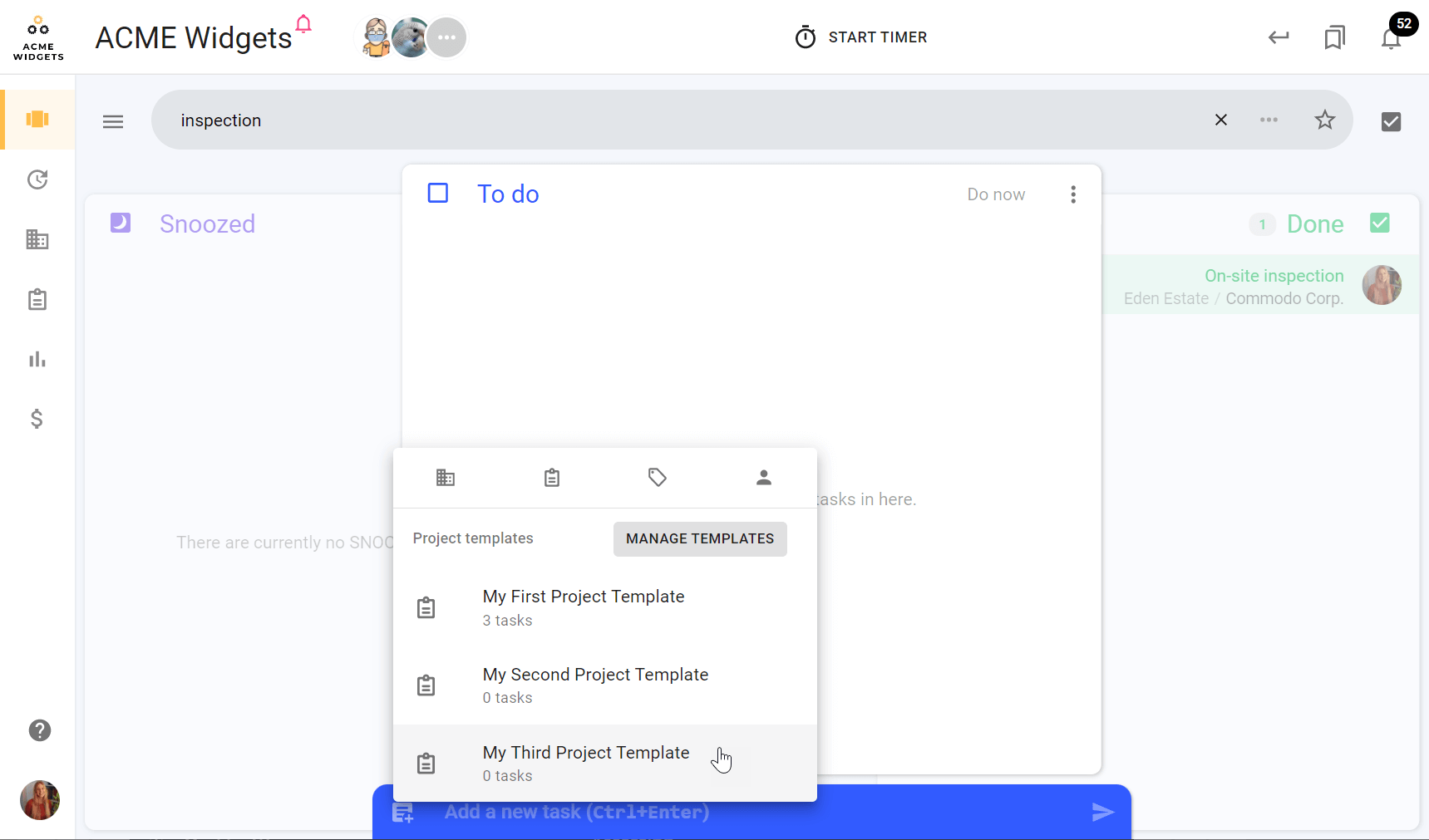
A pop-up window will appear. Here, you will have to configure a few options. It is important that you do this carefully.
Most importantly, when it comes to the project title.
If you do not have a distinct project title, then you may end up with several projects of the same name, which can quickly become confusing.
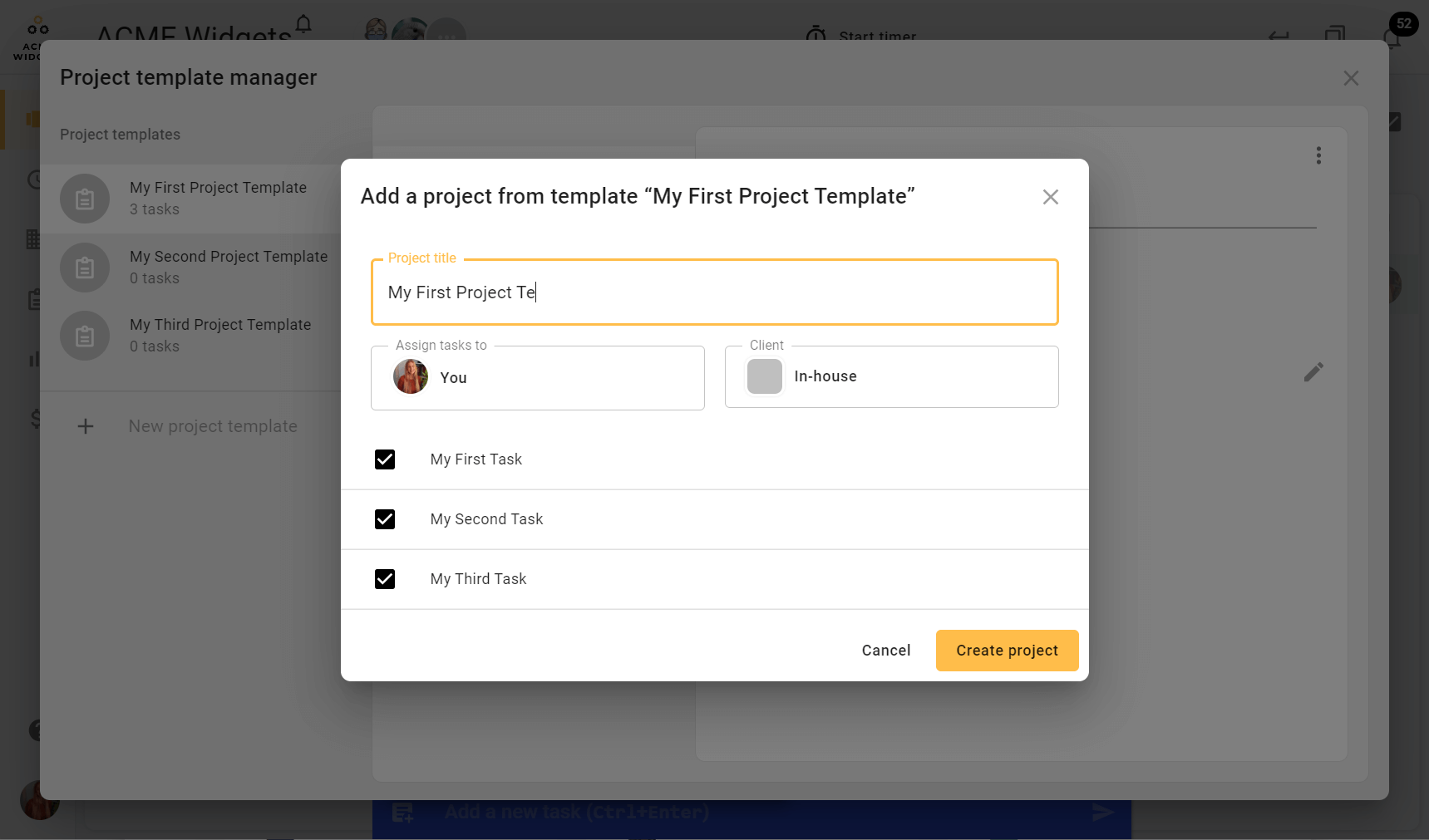
Then, you can choose:
- Which tasks, if not all, you want to send live to the Workspace as part of this project. Simply untick the boxes next to the tasks that you do not want to include.
- An assignee – that is, the user responsible for the tasks being sent live to the Workspace as part of this project.
You can also add new clients and invite new staff on the fly here, too. All you have to do is type in the name of the new client or staff when prompted from the pop-up window that appears when you select either the ‘Assign tasks to’ or ‘Client’ fields.
Now, you can hit ‘Create project’.
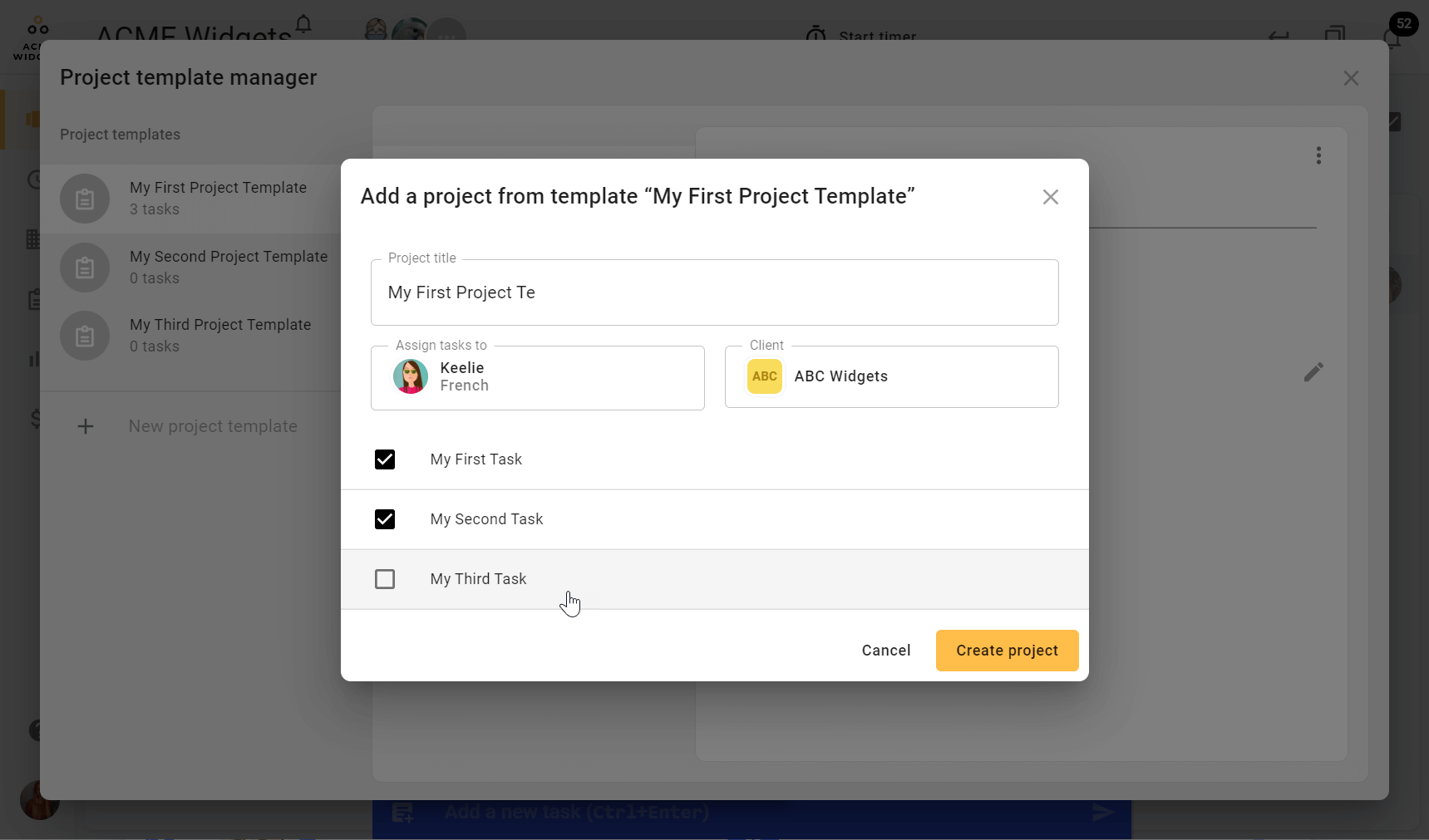
Note: When you use a project template from the Task Dashboard, after you hit ‘Create project’, you will automatically be taken back to the Task Dashboard. It will be filtered to show the tasks in your new project.
If any of your tasks created from the project template were given a ‘Snoozed’ workflow status or created as a ‘Draft’, they will appear as such.
When you use a project template from the projects tab on the Client Dashboard, after you hit ‘Create project’, you will remain on the Client Dashboard. Likewise, if you use a Project Template from the Projects Dashboard, after you hit ‘Create project’, you will remain on the Projects Dashboard.
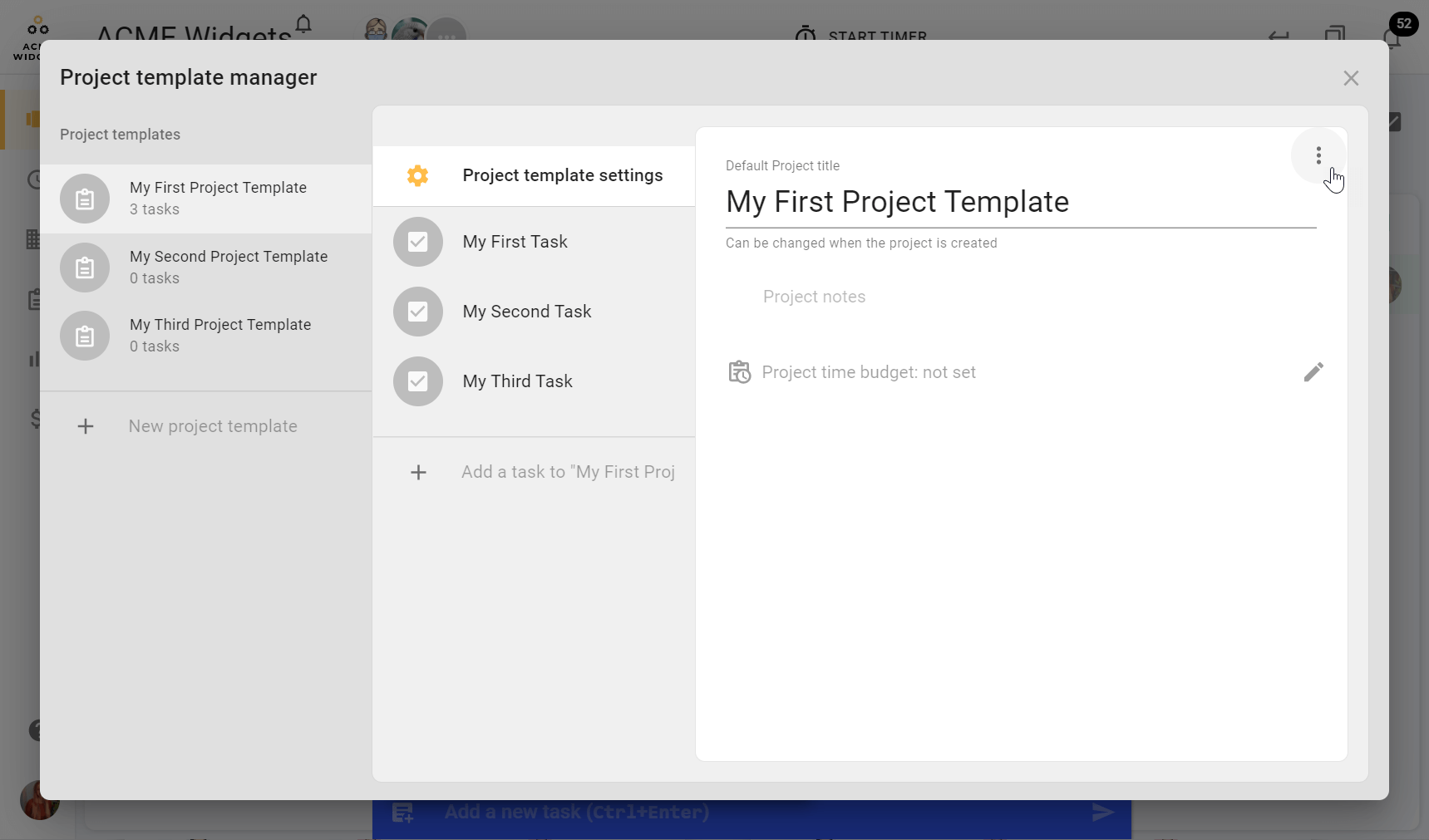
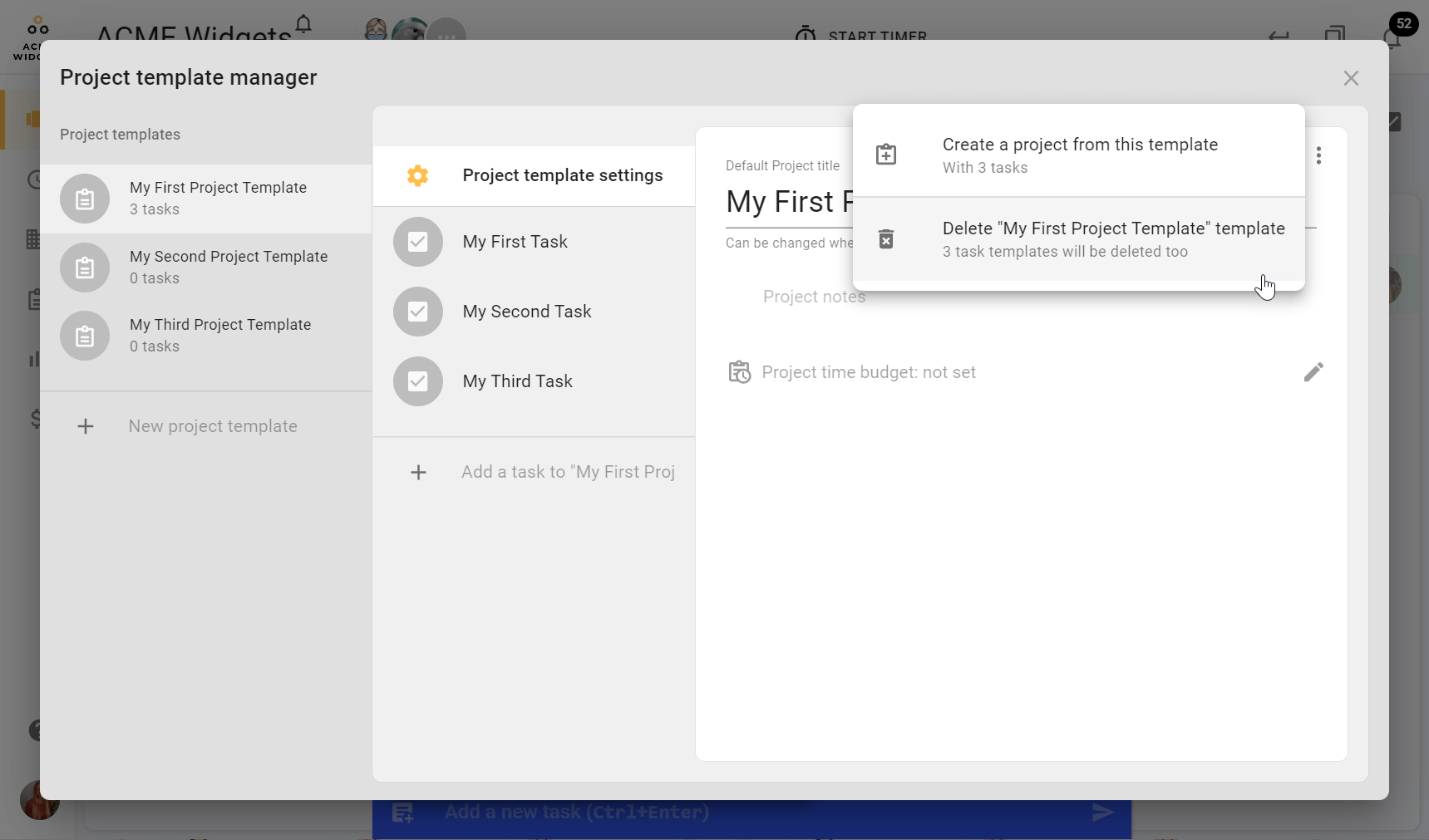
While in the Project Template Manager, the only way to send a project live to your Workspace is through the project template Settings. Select ‘Project template settings’ from within the middle column of the manager, and then select the three-dot menu at the top right-hand side of the third column.
You can also delete a project template from here.
Delete a project or task template
You can delete a project template from within your project settings. Select the project template you want to delete from the left column in the Template Manager. Select ‘Project template settings’ in the middle column, and then select the three dots that appear in the right-hand corner of the right column.
You will see there the option to delete that project template. This cannot be undone.
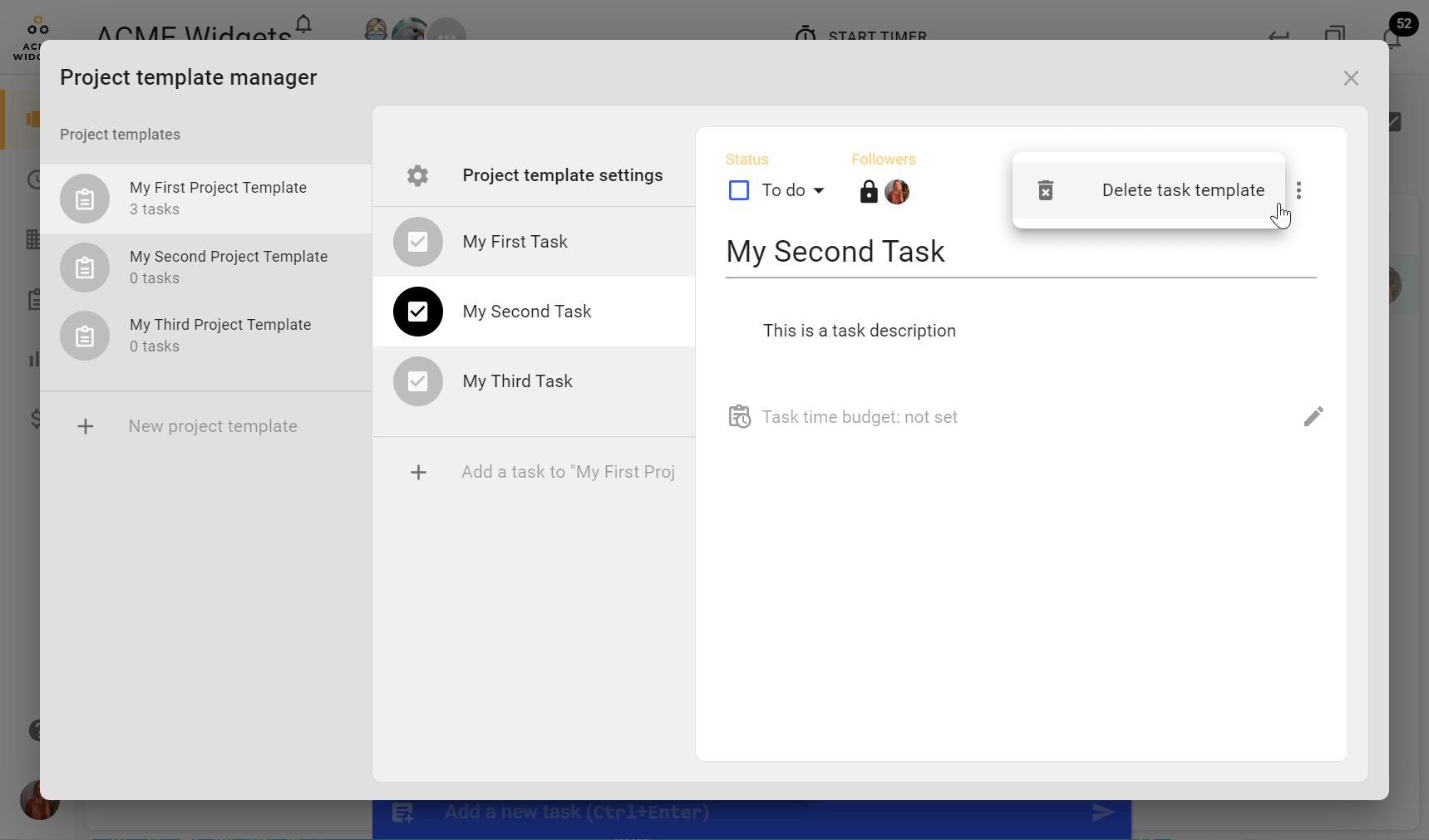
If you would like to delete a task template, simply select the task template you want to delete from the middle column in the Template Manager, then select the same three dots that appear in the right-hand corner of the right column.
FAQs
Have questions? If you can’t find what you need, or would like more support, please contact us at [email protected].
Why might I want to drag and drop my tasks (reorder) within a project template?
You can manually sort tasks within the Task Dashboard (provided you have chosen this mode) to help prioritise them.
All staff see the tasks in the same order. When you build a project template, therefore, you may wish to set the task order in the template so that the newly created tasks maintain that order when they’re pushed live to the Workspace.
Should I use a project template or todo.vu’s repeating tasks feature?
Repeating tasks are ideal if you have a single todo.vu task that you want to automatically repeat many times.
Project templates work well when you need to reuse a set of multiple tasks. Project templates are deployed manually.
Why might I want to create a Draft task in a project template?
When a new todo.vu task is created in the ‘To do’ Workflow state, it automatically sends an alert to the task’s assignee.
However, if you plan to assign different tasks to different people or you wish to tweak the tasks before anybody is alerted, then you would want to set the initial state of the tasks to Draft.
That will allow you to deploy the new project, adjust the task settings then batch publish the tasks when you’re ready.
READ NEXT:
Learn about fixed-price projects in todo.vu, which enable billing at a flat rate instead of by the hour. Read here >>